
English| EUR
Suggested for you
More currencies
Choose a language
Thailand's best-known canal market earns the label and defies it in the same morning. Ratchaburi's Khlong Damnoen Saduak still moves produce by paddle boat, yet souvenir stalls and long-tail engines now outnumber the farmers. This page separates the staged theatre from the working market, and tells you which hours reward the trip.
Quick answer
Partly, yes — but entry costs 0 THB, so the trap is in what you buy, not what you pay to look. Souvenir stalls, inflated fruit prices and hard-sell long-tail boat touts dominate once the coaches land. The market runs 07:00–13:00 daily, and arriving between 07:00–09:00 is what separates a genuine canal morning from a scripted one.
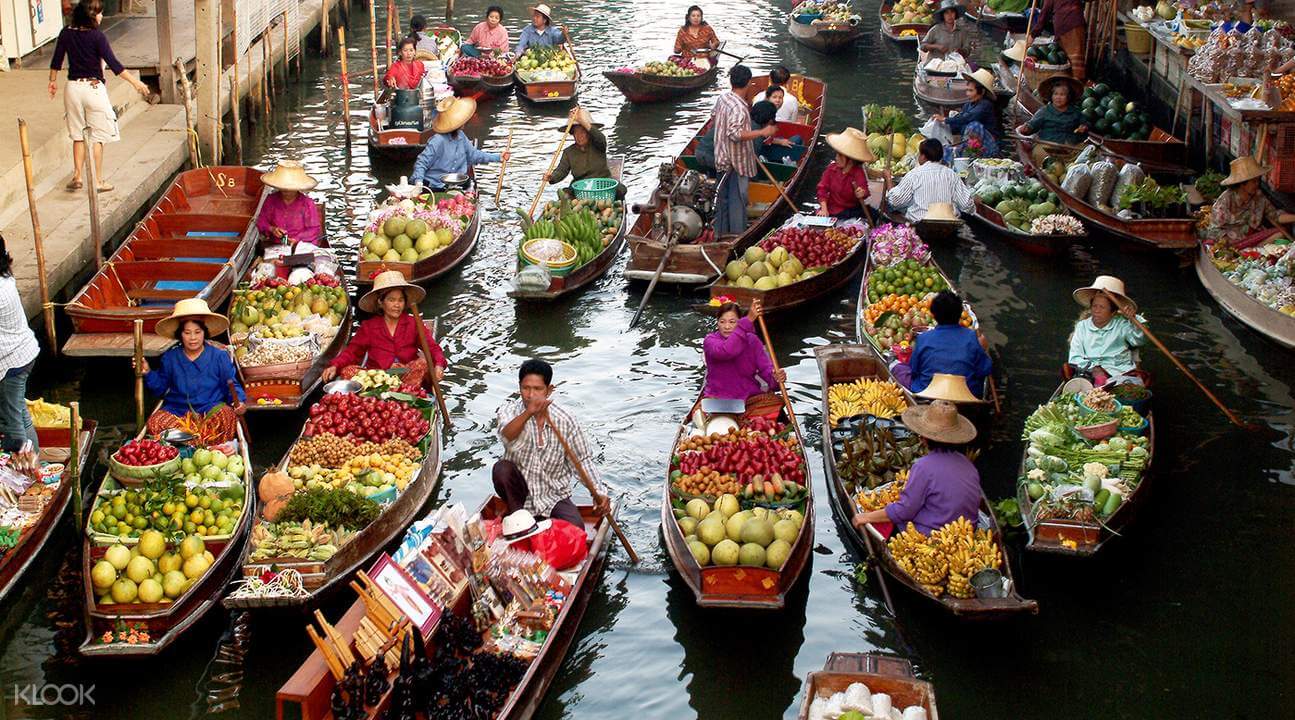
The canal was dug in 1866 on the order of King Rama IV, a nine-kilometre cut linking the Mae Klong and Tha Chin rivers so rice and coconut sugar could reach Bangkok by water. That infrastructure, not tourism, is the reason boats still gather here each morning. The reputation of Damnoen Saduak floating market as a tourist trap grew from what was built on top of it: a souvenir corridor along Khlong Ton Khem where lacquered elephants and folded straw hats outnumber anything grown nearby. Two markets occupy the same water at different hours. The first is commercial in the old sense — vendors in conical hats paddling sampans loaded with pomelo, rambutan, mango and charcoal braziers turning out boat noodles and grilled river prawn. The second is performance: bright parasols, posed photographs, and long-tail boat operators quoting tourist rates for a loop of the same three canals. The handover happens mid-morning, when coach groups arrive from Bangkok, 100 kilometres east, and the narrow waterway at Hia Kui becomes a traffic jam of hulls. Context matters for anyone weighing a Damnoen Saduak floating market tour against the alternatives. Amphawa, 25 kilometres south in Samut Songkhram, trades in the afternoon and evening and draws a largely Thai crowd. Tha Kha operates on a tidal schedule and stays small. Damnoen Saduak is bigger, easier to reach, and photographed more than both combined — which is precisely why it absorbs the most visitors and the most criticism. Reaching it by minivan from Bangkok's Southern Bus Terminal remains the standard route, and the site sits in Ratchaburi province, not Bangkok. What to do with the verdict is simple. Treat the Damnoen Saduak floating market tourist trap label as a warning about timing and spending, not a reason to skip the canal. Walk the wooden side-paths before committing to a boat, watch what Thai buyers pay before negotiating, and accept that any souvenir priced in a floating shop is a souvenir price. The market is free to enter; the costs are optional and entirely yours to decline. Arrive while the produce boats are still working and the Ratchaburi canal landmarks read as a place where people live, rather than a backdrop. Linger past noon and the theatre is all that remains.
“The market is free to enter; the costs are optional and entirely yours to decline.”
The 'tourist trap' label often stems from avoidable missteps rather than the market itself. Most complaints trace back to inflated boat prices, aggressive vendors, and poor timing.
Accepting the first boat price quoted
Paddlers at the jetty often quote 500–800 THB. Walk to the canal edge where locals negotiate 200–300 THB for 30-minute rides, or share a longtail boat to split costs.
Arriving after 10:00
Tour buses flood the canals mid-morning, creating gridlock and diminishing the traditional atmosphere. The 07:00–09:00 window delivers smoother navigation and better photo opportunities.
Buying from boats that approach you
Floating vendors who paddle aggressively toward tourists typically charge double. Wait for boats to pass naturally, compare visible prices on neighboring vessels, and gesture only when you see fair rates.
Skipping the land market entirely
The canal section is photogenic but limited in variety. The adjacent walking market offers lower prices, local snacks, and artisan goods without the boat-ride premium.
Bringing large bills
Many vendors lack change for 1,000 THB notes, leading to rushed transactions or overpayment. Carry 20, 50, and 100 THB notes for smoother purchases and accurate pricing.
The most effective strategy to experience the market before the arrival of large tour buses is to visit during the best arrival window of 07:00–09:00. Arriving early provides a quieter atmosphere and cooler temperatures before the midday heat.
—
Early arrival helps bypass the heavy influx of visitors from Bangkok.
Cool and dry, 25°C–30°C
This period offers the most comfortable weather for navigating the narrow canals.
Hot and humid, 30°C–35°C
High temperatures can make mid-day canal tours uncomfortable for some visitors.
Verdict: The best time to visit is on a weekday morning between 07:00 and 09:00, ideally during the cooler months of November to February.
Damnoen Saduak Floating Market operates on a consistent schedule throughout the week. Visitors can access the market daily during the morning hours.
There is no cost to enter the Damnoen Saduak Floating Market area. Expenses are limited to optional services such as private boat rides.
Verdict: A typical visitor pays 0 THB for entry, with total costs depending solely on whether they choose to engage in paid boat transport.
Damnoen Saduak Floating Market is located in Damnoen Saduak District, Ratchaburi 70130, Thailand. The most reliable way to reach the market independently is by road transport from Bangkok.
Southern Bus Terminal (Sai Tai Mai) to Damnoen Saduak
Highway 4 (Phet Kasem Road) to Highway 325
Direct hire from Bangkok city center
Arriving via private car or taxi allows for greater control over your drop-off point, helping you bypass the primary tour bus drop zones. Aim to reach the location within the 07:00–09:00 window to ensure easier access to independent boat operators.
Navigating the narrow waterways effectively requires a strategy for managing boat interactions and vendor exchanges.
Ask your boat operator to pause in wider canal sections rather than near busy docks to get clearer shots of the market activity. This avoids the congestion caused by boarding points and allows for better lighting angles.
Confirm if your boat ride includes the quieter residential khlongs or only the main market artery before departing. The side canals offer a glimpse into local stilt houses away from the primary commercial traffic.
Use a polite but firm wave or shake of the head to decline unwanted items. Vendors are accustomed to direct communication and will move on quickly if you remain neutral.
Focus on vendors selling seasonal fruits or cooked items prepared on their boats rather than mass-produced souvenirs. Authentic goods are typically limited to what can be easily stored and served from a small wooden vessel.
Keep bags and mobile devices away from the edge of the boat while passing other vessels. Frequent docking and narrow clearances make it easy for items to be bumped or fall into the water.
Everything you need to know about damnoen saduak floating market tourist trap
Whether the Damnoen Saduak floating market tourist trap perception is accurate depends on your travel expectations. While it is a major commercial hub, it remains an iconic example of traditional canal trade in the region. Many travelers find that arriving early helps them bypass the heavy congestion often associated with this reputation. Understanding that the area is designed for visitors is key to managing expectations at the damnoen saduak floating market tourist trap. The busy nature of the canals is a natural result of its popularity as one of the most well-known canal landmarks. You can navigate the experience more effectively by researching local logistics ahead of time. Arriving during the best arrival window of 07:00–09:00 is the most effective strategy to avoid the damnoen saduak floating market tourist trap feeling. This early timing allows you to see the vendors before the mid-morning heat and peak bus arrivals occur. While entry to the area is 0 THB, individual boat operators set their own prices for canal tours. It is helpful to clarify all costs before boarding any vessel to avoid misunderstandings during your visit to the damnoen saduak floating market tourist trap. Booking a structured excursion can simplify transportation and navigation, though independent travel is also possible. Comparing your options allows you to choose an experience that aligns with your interest in historical local trade routes. Focusing on early morning engagement and clear communication with vendors will enhance your visit. This approach helps you move past the common labels and focus on the authentic canal lifestyle still present in the area.
Damnoen Saduak Tickets and Pricing
Read more Tickets & toursDamnoen Saduak Boat Ride Experiences
Read more GuideVisiting Damnoen Saduak: Timings and Tips
Read more GuideHow to Get to Damnoen Saduak
Read more Tickets & toursDamnoen Saduak Tours from Bangkok
Read more Tickets & toursPrivate Damnoen Saduak Tours
Read more